
Surfboard Design Guide

Surfboard Design
Surfboard design is the art of hand shaping a surfboard from a foam blank or piece of wood and making it into a vehicle for riding waves. The finished surfboard design is radically different from the crude materials it started as before a shaper begins to form the board. Since surfboards are ridden at beaches all over the world a designer must create a board that will work well in specific conditions.
In order to make the best surfboards, shapers spend countless hours honing their craft, becoming better surfboard builders one board at a time. Luckily for us, their passion and commitment result in surfboards that will enhance our skills and increase enjoyment in the water. Here are some of the elements a surfboard shaper keeps in mind while designing a new board.
The three main aspects of surfboard design are:
1. Components of a surfboard
2. Types of surfboards
3. Materials used in surfboards
1. Components Of A Surfboard
Length – This is the measurement of a surfboard from nose to tail. A longer surfboard will offer more paddling power and stability . The large surface area allows the surfer to paddle faster and get into larger waves. Most shapers will want to know the surfer’s weight and ability before suggesting the right size board. (more on surfboard length)
Width – This is the measurement of a surfboard at its widest point. A wider shape will allow the surfer to eliminate a few inches of length without sacrificing paddling or planing speed. The location of the surfboard’s wide point deserves careful consideration as it will affect riding style and turning radius. (more on surfboard width)
Nose – This is the front tip of the surfboard. The shape will affect entry into the wave, paddling ability, and noseriding.(more on surfboard noses)
Tail – The surfboard tail is the back end of the surfboard. Its design significantly affects the performance of the finished product. It has various shapes, performance characteristics, and rockers. Some examples are: square, pin, swallow, diamond and squash. (more on surfboard tails)
Rocker – This is the curvature of the surfboard profile. The foam blank comes with a particular rocker that the shaper can alter a bit, but not drastically. A more dramatic rocker will make it easier to handle steep drops, facilitate tighter turns, but also slow the board down if it is heading in a straight line. (more on surfboard rockers)
Rails – These are the outer edges of the surfboard. They impact tube riding, planing speed, and turning. (more on surfboard rails)
Fins – Surfboard fins are the engines that make sure your board moves forward. They dictate turning radius, drive, hold in a wave’s face, drag vs. speed, and overall performance. Typical setups are single fin, twin fin, tri fin (thruster), quad fin, and the rarely seen five-fin setup. (more on surfboard fins)
Bottom Contour – The surfboard bottom contour contributes to the speed, turning ability, and style of ride. A convex bottom, sometimes called a hull, will sit low in the wave, move slowly, and offer the surfer a smooth ride. A concave bottom will skip on top of the water, creating lift and shooting water out the back of the board toward the fins. This makes for a very fast and maneuverable ride. Concave designs will vary. (more on bottom contours)
Foil – Foil refers to the distribution of surfboard foam from nose to tail. The thickness of the nose, middle, and tail weigh heavily in the overall performance of the surfboard. (more on surfboard foils)
Deck – The deck is the top of the surfboard. The surfboard rails often impact the deck design. The most common are domed, flat, and step decks. Each has its own benefits, performance characteristics, and feel. A number of companies now offer soft top surfboards. These lower the chance of injury and are incredibly durable without sacrificing too much performance. (more on surfboard decks)
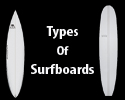
2. Types Of Surfboards
Shortboards –  This surfboard design had great success with high performance surfing in the 1970s and still allows surfers to push the boundaries of their ability. The modern shortboard is typically under seven feet long and is made for aggressive surfing in critical sections of the wave. It is most commonly seen with sharp noses, thinner rails, and high rocker which produce high levels of maneuverability. Shortboards have evolved for use in competition by people in places like the United States, Australia, Brazil, Hawaii, France and England. They can be ridden in waves from waist high to double overhead.
Longboard – 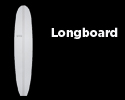 A classic longboard is the most traditional surfboard shape. Longboards were what surfers in Malibu, California & Waikiki, Hawaii originally rode in the 1950's & 1960's. They typically range from 8 feet to 12 feet in length. They are on average at least 2.5 inches thick & twenty inches wide. The fact that they are thicker allows them to paddle incredibly well. Someone learning to surf should start on a longboard shape to learn wave selection, paddling technique, and turning basics. Expert longboarders are the masters of style, surfing in a flowing and visually appealing manner.
Funboards – 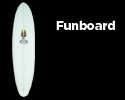 This term describes a larger surfboard shape with a lot of volume. They range in length from 6 feet to 8 feet. The funboard is a great transitional board for anyone who wants to move down in size while still maintaining superior paddling power and stability. Because funboards are wider, they allow the rider to balance easily, which makes them fun to ride, especially for beginners. The funboard will come I various tail shapes, nose shapes, and foils.
Fish – 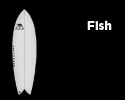 This board design gained popularity in the 1970s and originates from the knee-board. It is shorter, wider and flatter than a shortboard and works very well in small mushy surf. There is not much curve in the rocker of a fish, which makes it paddle very well and carry speed through flat sections of the wave.
Gun – 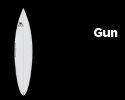 Guns are the surfboard to ride on big days. They range in length from 6’6” to 10’ with bigger boards for increasing wave sizes, allowing the surfer to paddle fast enough to catch heavy, fast moving waves. It is designed for big drops and handling well at very high speeds. Gun shapes are difficult to ride and require a lot of experience. They are mainly ridden at big wave spots in the Pacific Ocean, such as the North Shore and off of the coast of other islands where winter storms produce powerful waves throughout November, December, January, February, March & April.
Hybrid – 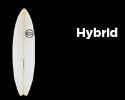 The hybrid surfboard design mixes the design features from two similar board types. One example is the hybrid fish which mixes the characteristics and performance of a shortboard design with the added width and tail design of a fish. This is a great board for a heavier surfer who wants to surf at a high level or anyone else who wants to catch a lot of waves.
Other – 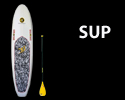 There are a few other surfboard shapes that are less common. Each has its own strength and features that allow them to excel in specific conditions. Some examples include, single fin shortboards, bonzers, displacement hulls, alaias, tow in boards and stand up paddle board like the one pictured.
3. Materials Used In Surfboards
Foam Blank – Almost 100% of surfboards in the lineup today are made with polyurethane or polystyrene (Styrofoam) cores. The foam blank arrives to the shaper in the crude outline of a surfboard shape, including varying degrees of rocker. Your shaper then starts “mowing foam” as he shaves off the excess foam until he arrives at the shape of your next surfboard. Two forms of Polystyrene are the most common: Expanded Polystyrene (EPS) and Extruded Polystyrene (XPS).
Fiberglass cloth - A shaped foam blank is too weak and porous to use in the water on its own. To strengthen the surfboard a layer or two of fiberglass cloth is applied to the entire length and width of the surfboard, both deck and bottom. The most common fiberglass used is 4oz and 6oz cloth. Shapers have started using alternative materials to strengthen a surfboard, such as Kevlar and carbon fiber or natural materials like hemp based cloth.
Resin – The glasser must use a resin to bond the cloth to the shaped foam surfboard design. The resin is poured onto the cloth and the board until the cloth is completely saturated. The polyester resin has been used since the 1950s and is still the most commonly used today. Epoxy resin has gained popularity over the last several years due to its increased strength and ability to create lighter boards. Both epoxy and polyester resin may be used with polyurethane foam, but only epoxy may be used with polystyrene foam. Polyester will destroy the polystyrene structure at the point of contact.
Some epoxy surfboards have a plastic look. These boards do not allow you to see the foam blank, the fiberglass cloth, or the stringer beneath the exterior. They are built with what is called a sandwich construction in which the shell is made and then filled with foam. They tend to be stronger and better at resisting pressure dings that form by standing on the the deck, though the material also has an effect on the flex pattern.
Stringer - This wood structure typically runs down the center of a foam blank. It provides strength and flex memory for the surfboard. Some shapers will move the wood stringer from the board’s center to its rails, creating better flex memory. Common wood types used in stringers are bamboo, balsa, Basswood, Western Red Cedar, and Englemann Spruce.







5 Comments